Electrical systems power every production line, building and machine. When they fail, the result can be unplanned downtime, damaged equipment, fire or injury. Electrical quality inspection checks that installations and equipment are safe, perform as specified and comply with current regulations — and it detects deterioration long before it becomes a failure.
Why electrical inspection is important
- Safety — protecting people from electric shock and premises from fire.
- Reliability — identifying insulation breakdown, loose connections and overheating before they stop production.
- Compliance — UK duty holders must maintain electrical systems so that they do not cause danger (Electricity at Work Regulations 1989), and installations are assessed against BS 7671 (IET Wiring Regulations).
- Efficiency — poor power quality wastes energy and shortens the life of motors, transformers and electronics.
What we measure
Insulation resistance
Tests the condition of insulation in cables, motors and windings by applying a DC test voltage and measuring the leakage. Falling insulation resistance over time is an early warning of moisture, contamination or ageing.
Winding resistance
Low-resistance measurement of motor, generator and transformer windings. Imbalance between phases can reveal shorted turns, poor joints or damaged connections.
Voltage and current
Verifying supply levels, load balance between phases and current drawn by equipment against its rating.
Harmonics and FFT analysis
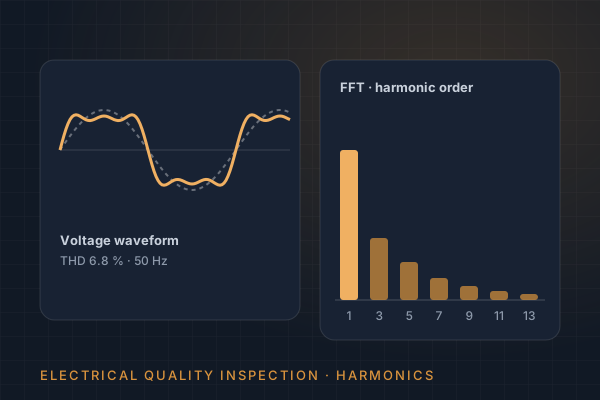
Modern loads such as variable-speed drives, LED lighting and power supplies distort the voltage and current waveforms. Fast Fourier Transform (FFT) analysis breaks the waveform into its harmonic components and calculates Total Harmonic Distortion (THD). High harmonics cause overheating of neutrals and transformers, nuisance tripping and equipment malfunction.
Partial discharge
Small electrical discharges inside deteriorating insulation in medium- and high-voltage equipment. Detecting partial discharge allows planned repair before a complete insulation failure.
Sound and vibration
Vibration and acoustic measurements reveal bearing wear, misalignment, imbalance and looseness in rotating machines, while thermal measurements identify hot joints and overloaded components.
Most electrical failures give warning signs — rising temperature, falling insulation resistance, increasing vibration. Inspection turns those signs into planned maintenance instead of emergency repair.
Who needs electrical inspection?
- Manufacturers with motors, drives, compressors and production machinery
- Construction projects requiring verification of new installations
- Engineering companies commissioning or maintaining equipment
- Small businesses with workshops, offices or commercial premises
What you receive
A clear report listing every test, the equipment used, measured results against the relevant limits, photographs where useful, and a prioritised list of recommended actions. For portable equipment, see our guide to PAT Testing.
Written by Abbas Ozden, CIO Inspection Ltd — quality control and inspection, Southend-on-Sea, Essex, United Kingdom.